
THE LANDSCAPE
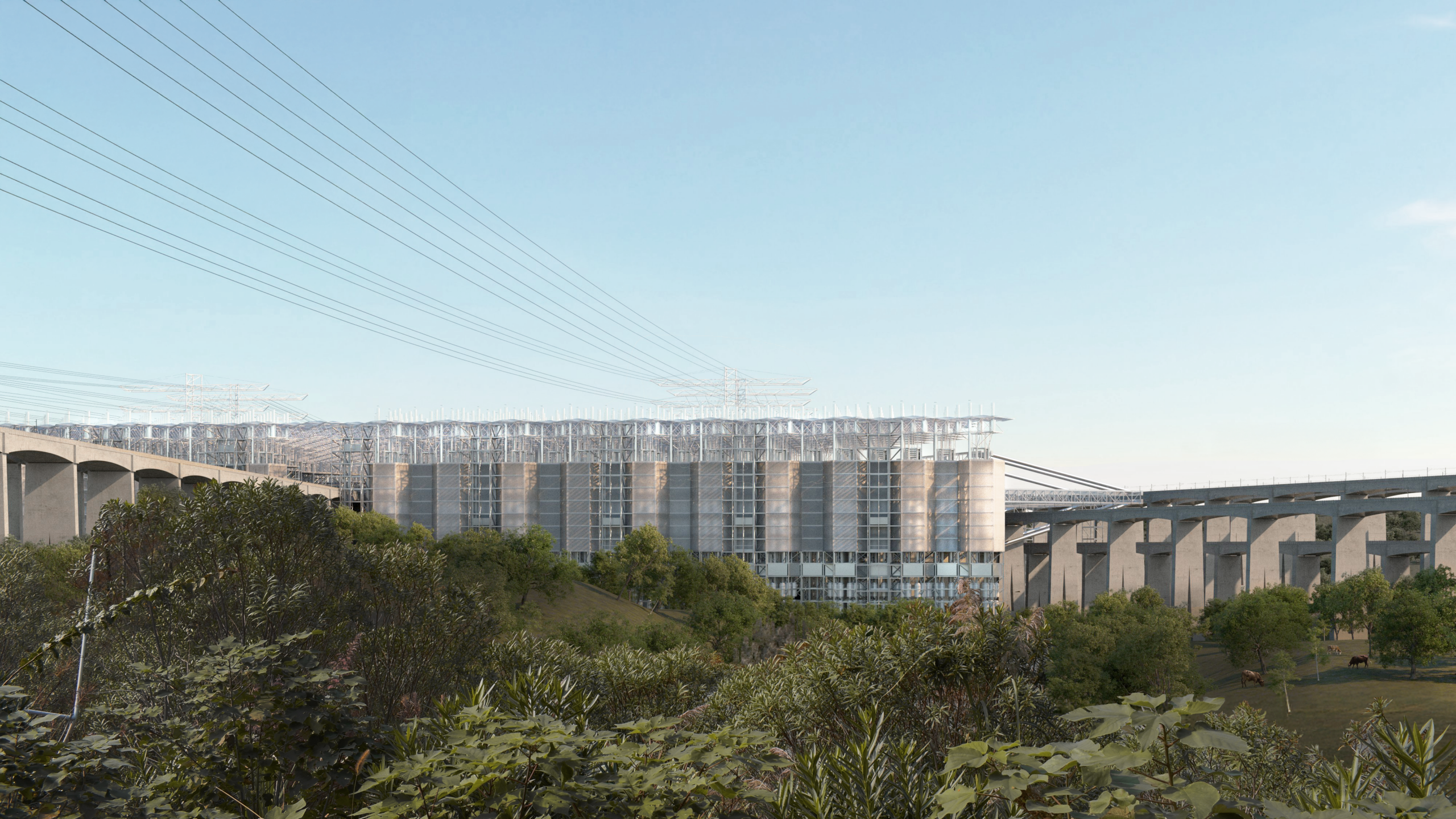
The sculpting of nature is not viewed as good or bad, but something inevitable with the current population size, especially if one intends to achieve equal distribution of goods. Such a view gives way to a new type of architectural form that additionally challenges the existing approaches of how structures of similar size interact with nature.
Avoiding scrutiny of the production method or its implementation by the same logic, one should also criticize the agricultural revolution, which fundamentally changed the interdependencies between the natural landscape and humans. It seems no longer productive to distinguish between natural and unnatural delineation, as in our current age, it in fact mostly regards the distinction between carbon-based and inorganic elements, as almost everything nowadays termed ‘nature’ has been shaped or influenced by human activity.
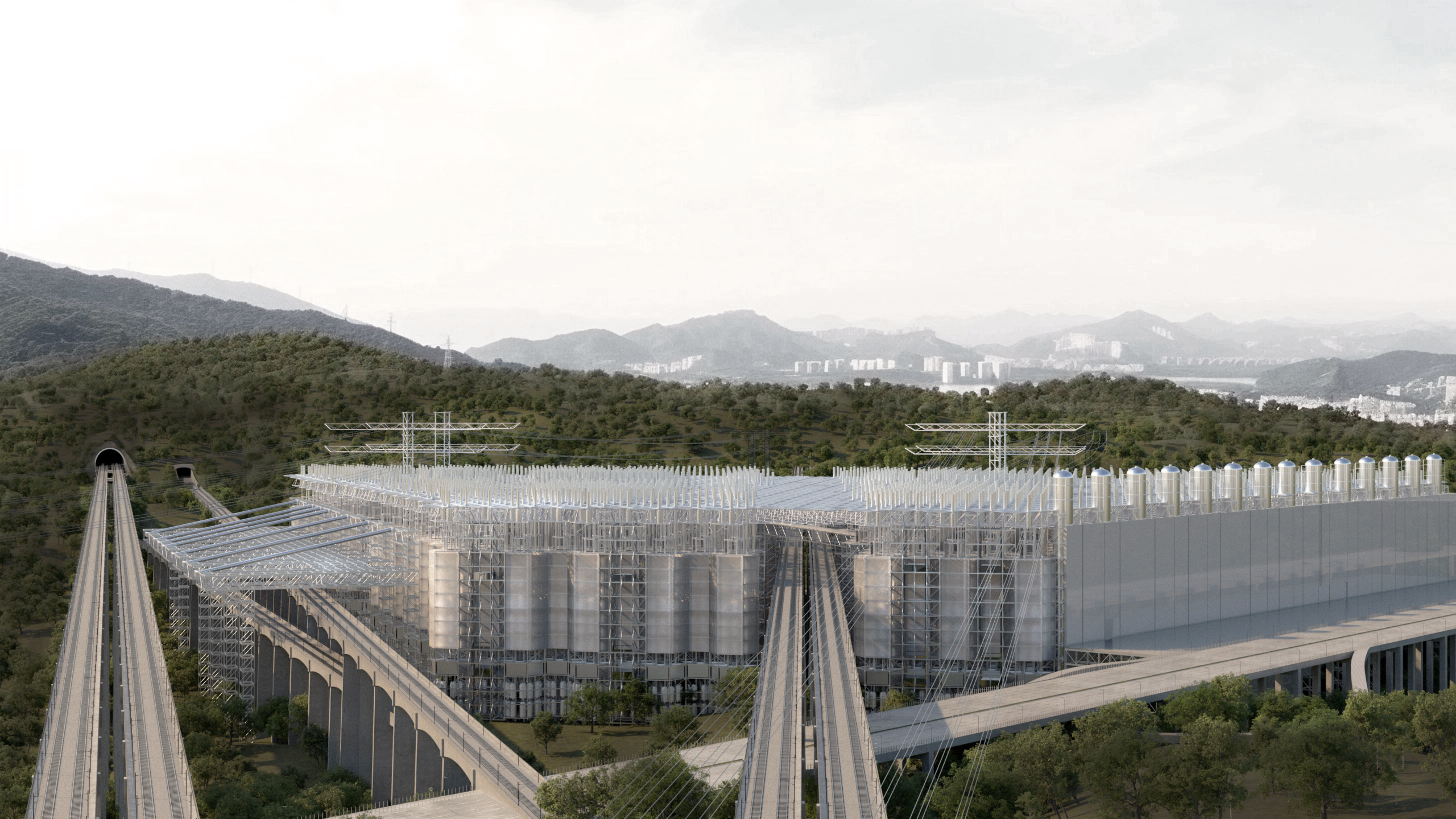
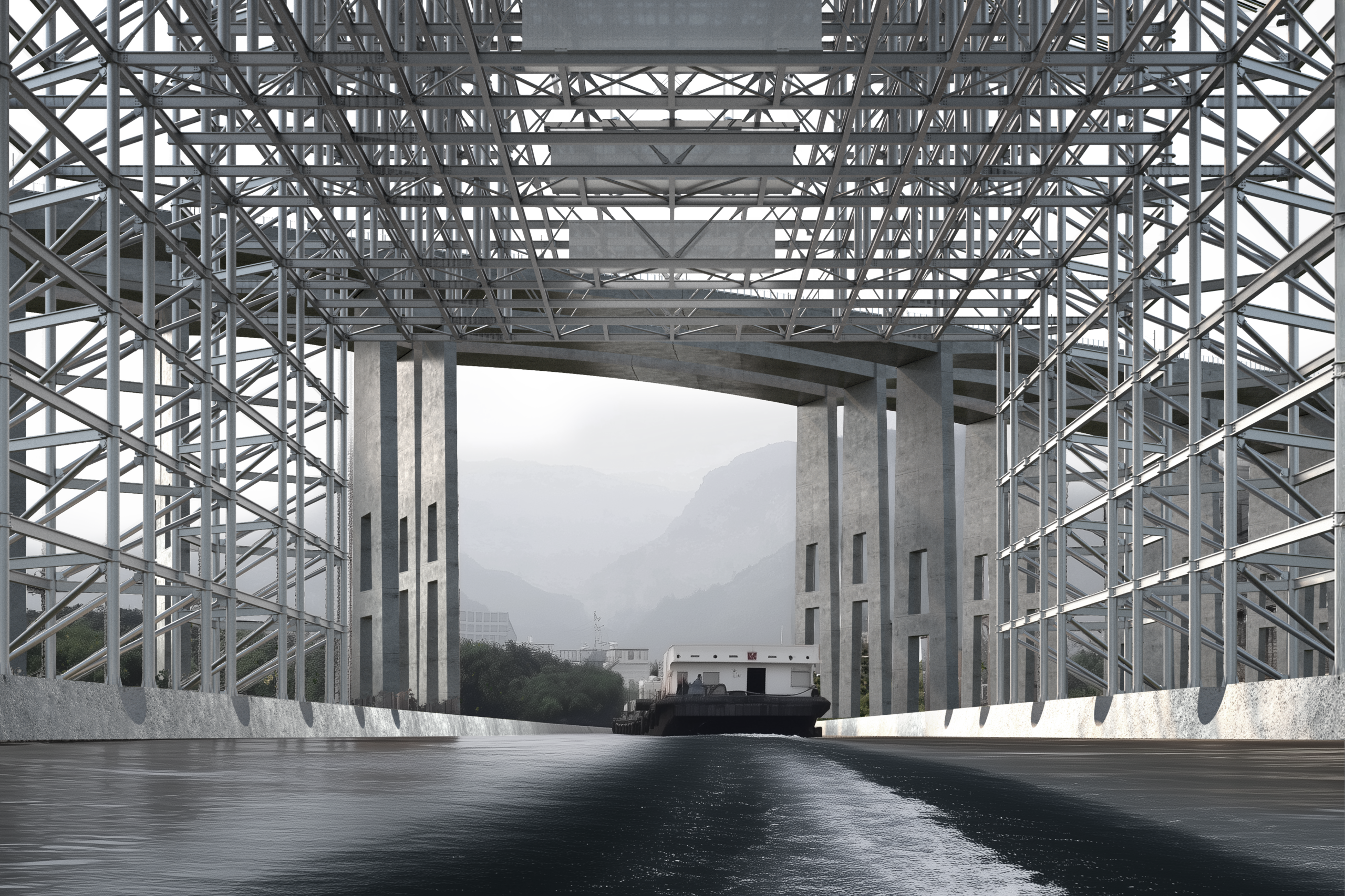
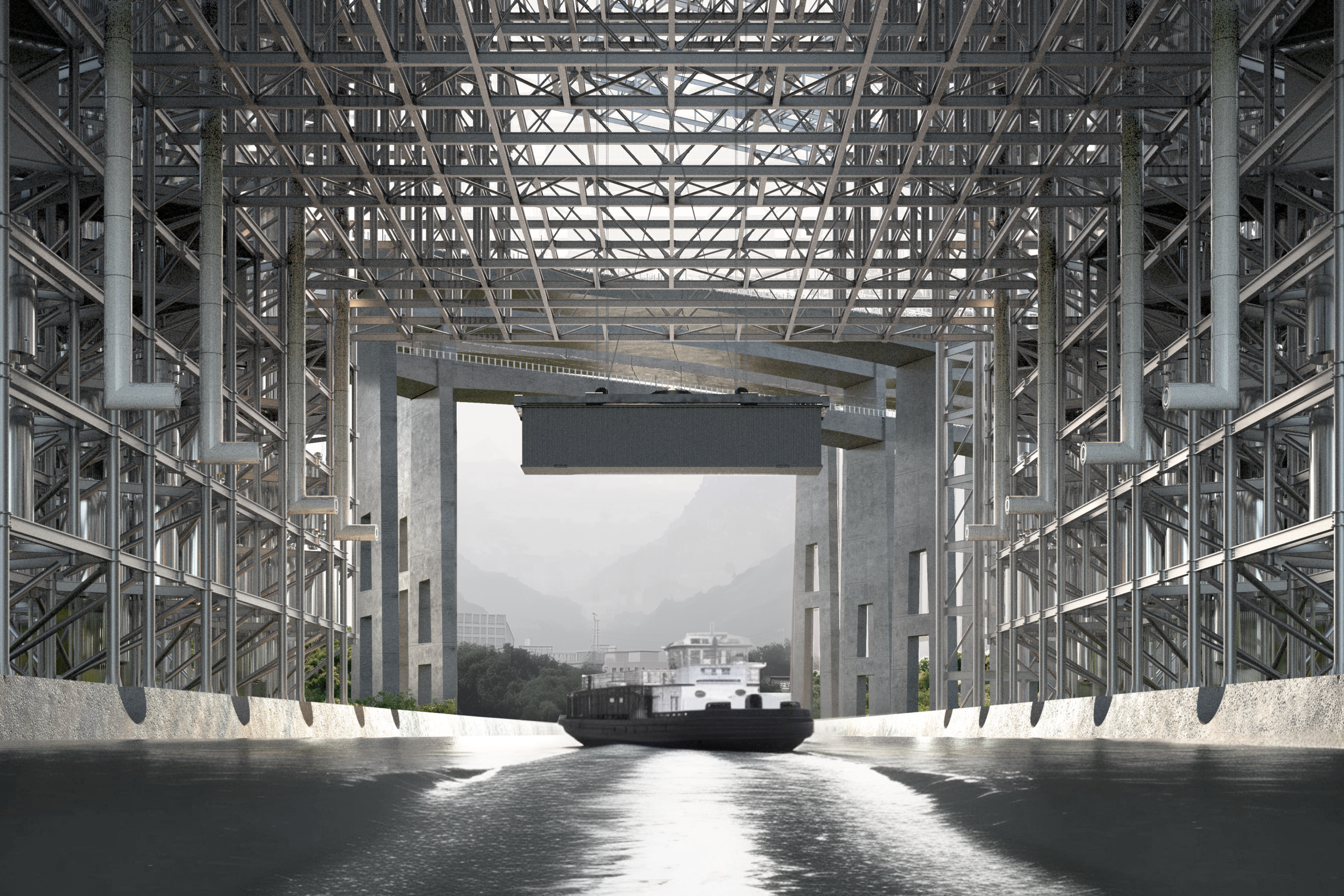
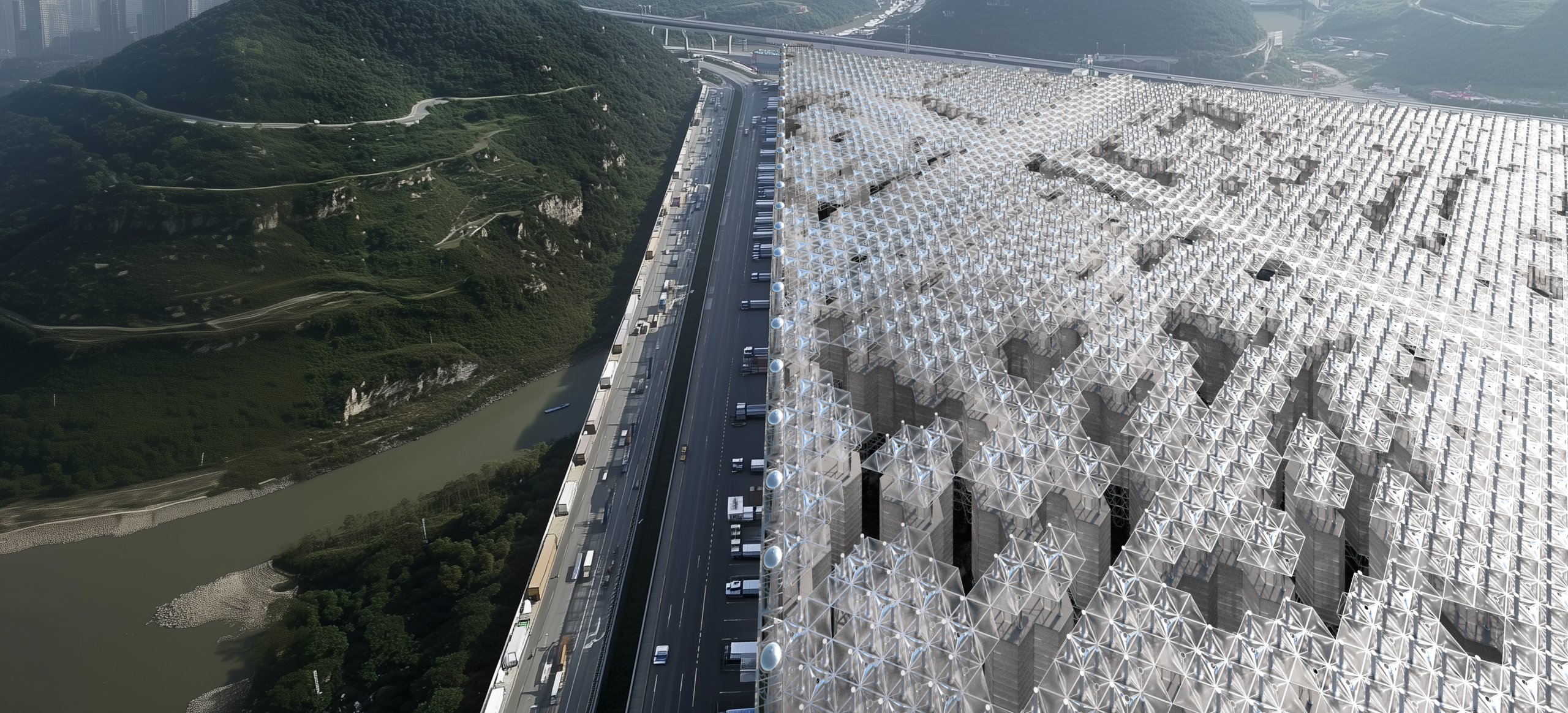
The landscape of automated ordering, as designed in the project, claims to be called ‘natural‘ as the fields supporting the grazing patterns of wild cows in the prehistoric age- certain biological processes are unfolding in both scenarios. The current meat production, in which the livestock has been genetically selected to provide the preferred traits, for example a large muscle mass, is no less ‘artificial’ than the production of cultivated meat, showcasing the outdated understanding of the terms natural and artificial, or how archaic such phrases have become.
It is also acknowledged that such a structure can only be considered environmentally neutral if the energy is sourced from a renewable source. Other aspects would have to be explored further, as, for example, the impact of the advancement of the cultivated meat industry on those people employed in the production of traditional meat, to prevent unemployment associated with the advancement of technology.
The prediction for maximum expansion of the factory is something that exceeds what the current tools of architecture can grasp. Rather, if the answer is going to be found, it would be done through intensive interdisciplinary studies, drawing on such fields as management philosophy, studies of logistical operations, transport network capacity and environmental sciences. This maximum expansion point could be speculated through the Theory of Constraints,[26] by taking into consideration multiple functional limitations and examining the structure through the lens of operational expenses, inventory and throughput. The limits could at some point be determined through an algorithmic logic, where some of the variables would be the speed of operations and the amount of production.
After a certain size, the Diseconomies of Scale[27] would affect the operation within the production facility, as the calculations needed to carry out the processes would become too complicated, or the connecting networks would create bottlenecks, causing inefficiencies.