

SITE
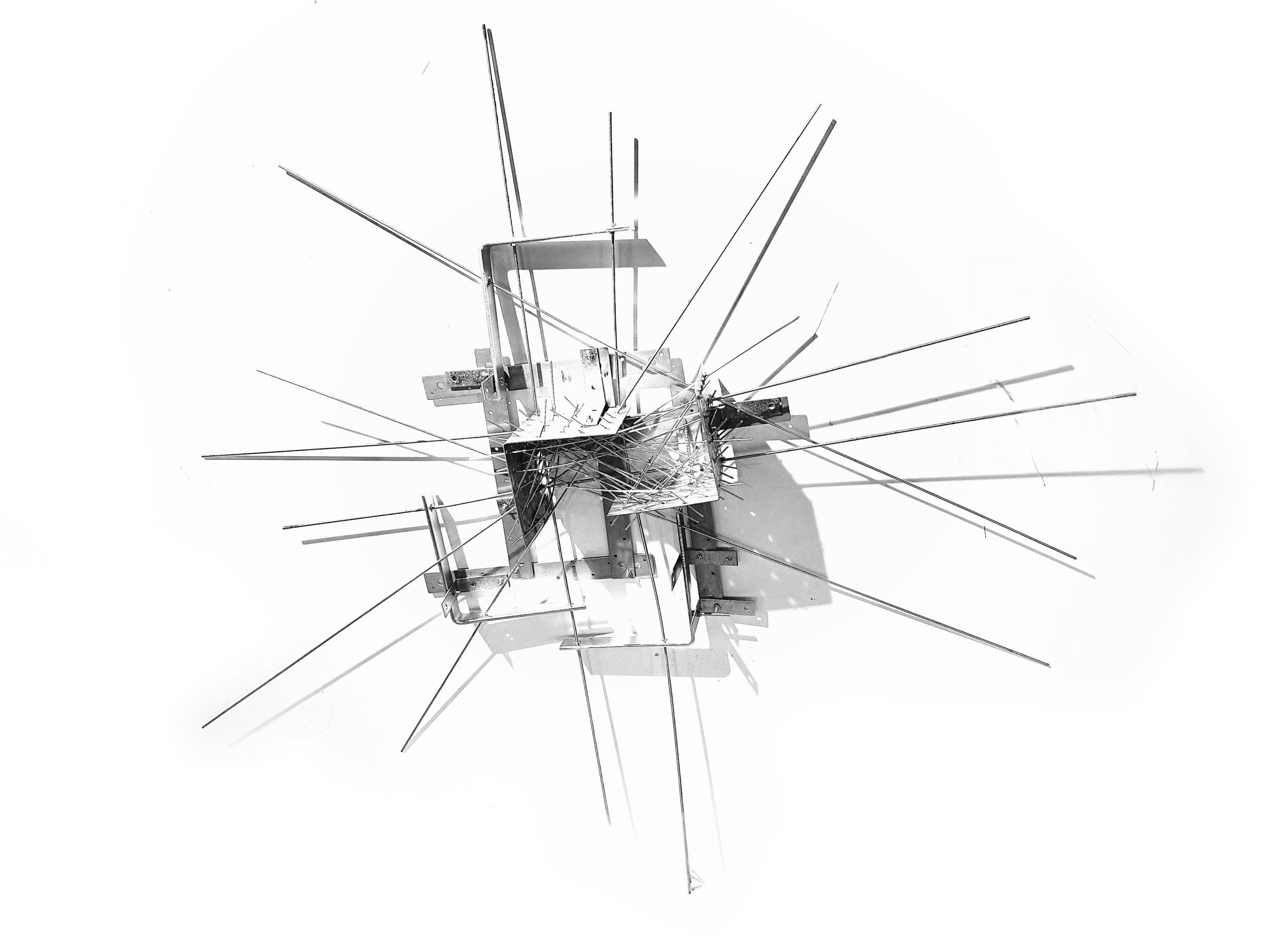
The site requirements of a new automated system are explored first in a model, in which the underlying networks become the backbone for the arrangement of objects or the site itself. A hierarchy is created between the supplementary and the primary objects that have to tap into the branches of the primary network at least two times, creating a certain redundancy. Supplementary objects are introduced to stabilize the ecology of the system, and due to the high interdependency on networks, each object is tightly interlocked. Yet there is always a possibility for a rearrangement, which would, for a while at least, establish a disorder in the system while a new order is created. Secondary networks emerge after the stabilization of the system, creating an abundance of linkages within the main object itself. The static state of the whole system itself may be questioned. The appearance of the networks alludes to the fact that only a small fragment of them can be seen in the given moment, indicating their open-system nature
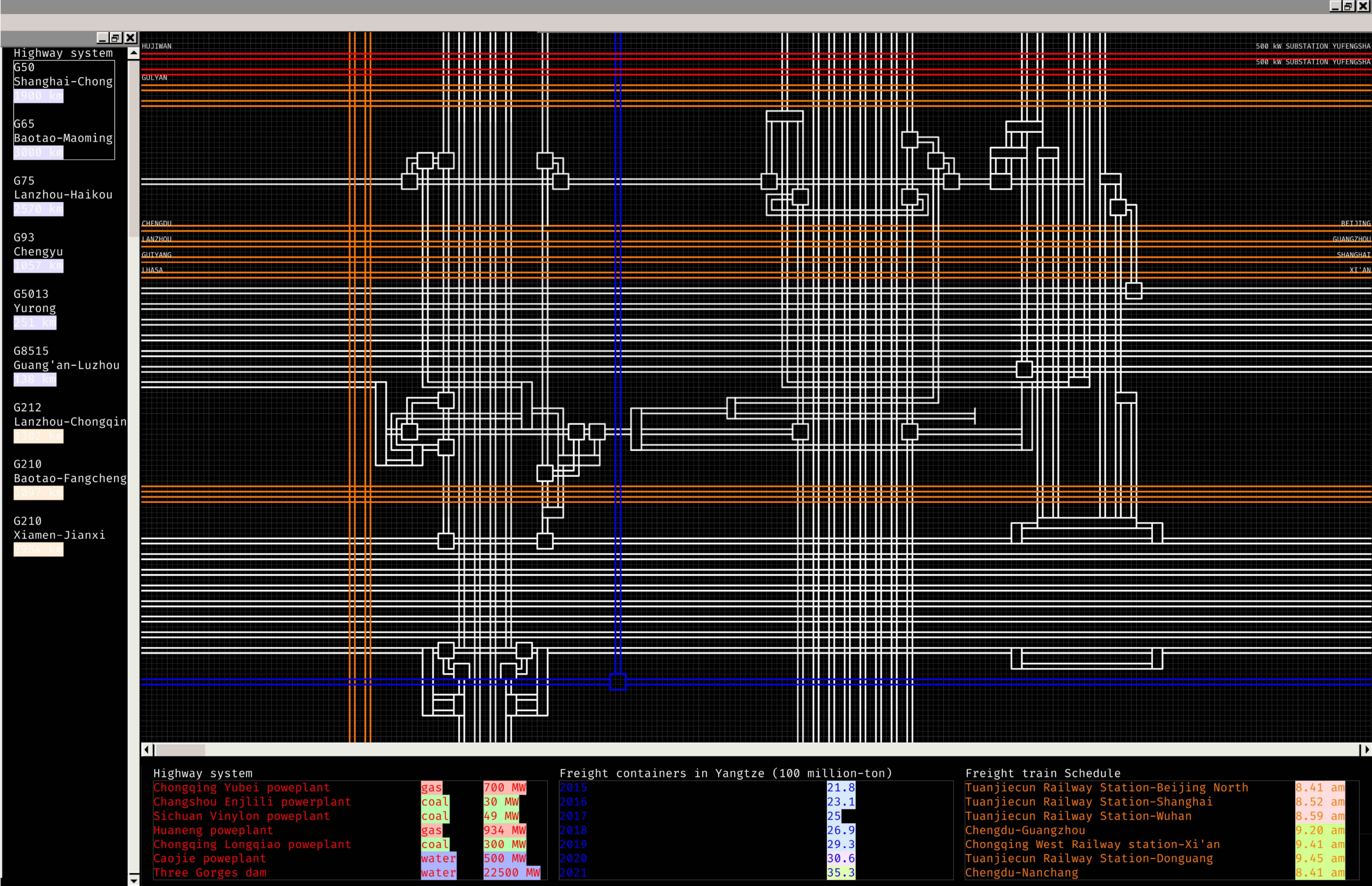
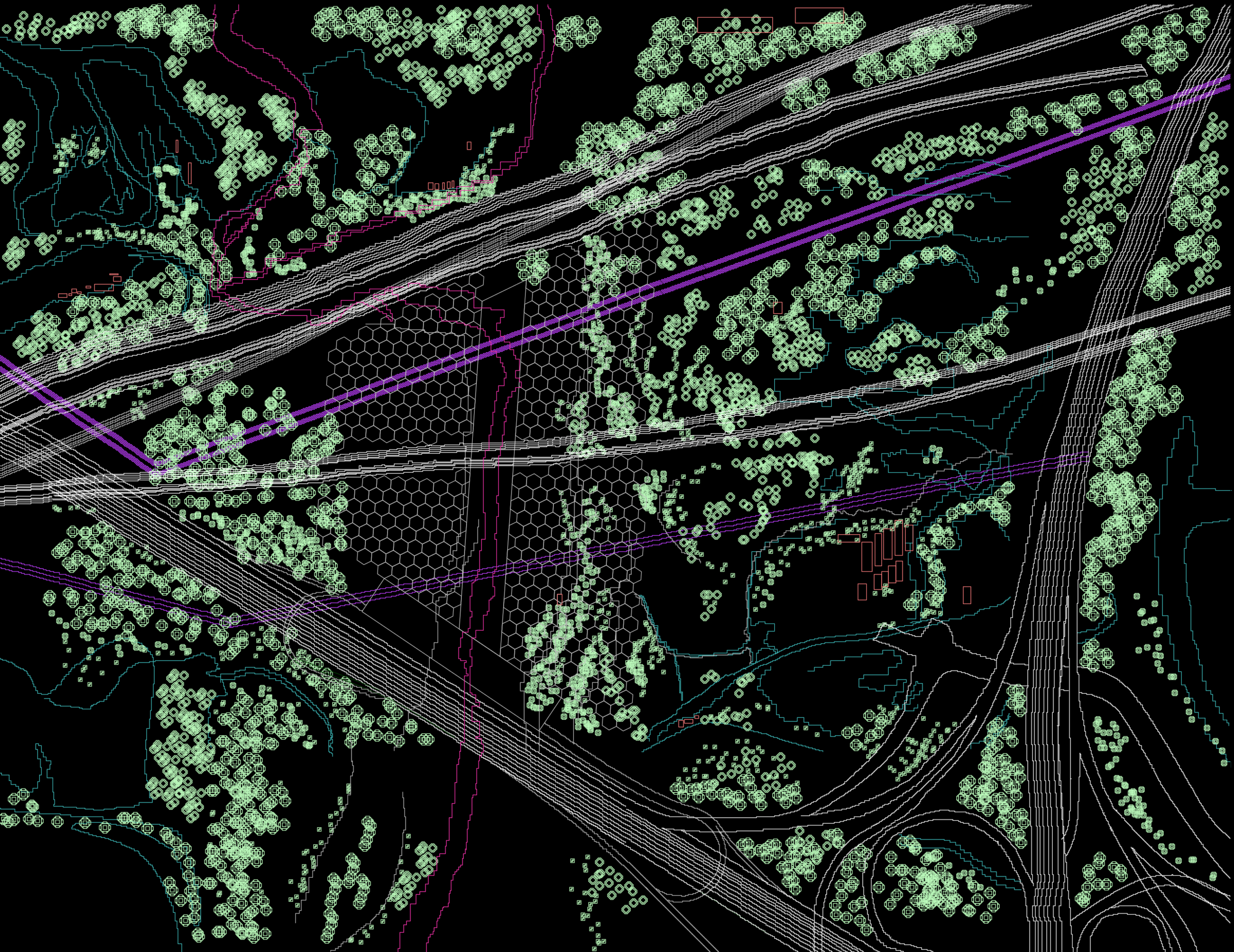
The site’s location near the Cuntan village in the Jiangbei district of Chongqing has been chosen because of the previously mentioned oversaturation of underlying networks, allowing the system within the proposed project to access large amounts of flows and providing a necessary redundancy in case of failure. The site is transversed by the G50 Shanghai-Chongqing expressway, spanning almost 2000 kilometers in length East-West, and the G65 Baotou–Moming expressway, 3000 kilometers in length, connecting cities of Inner Mongolia with Guangdong in the South. The site is crossed by six railway lines and an affluent ending in the Yangtze River, and the project’s placement also offers a tapping into 220 kW electricity lines. Furthermore, the site is well linked to global networks due to its proximity to Chongqing Jiangbei International Airport, Cuntan’s New International Town and Lianglu Cuntan Free Trade Port Area, China’s only bonded inland port.