






The Landscapes of Automated Ordering
Modi Operandi 12
 Go to Publication
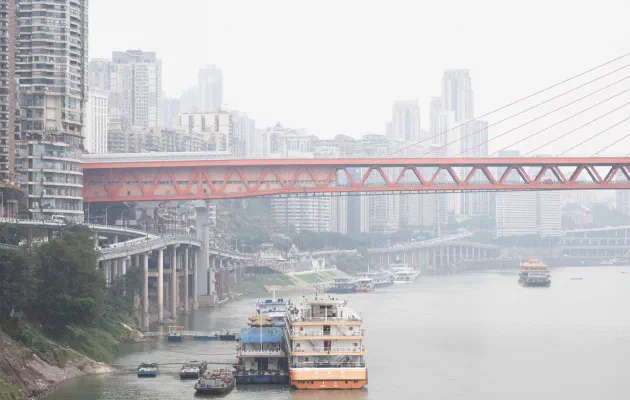
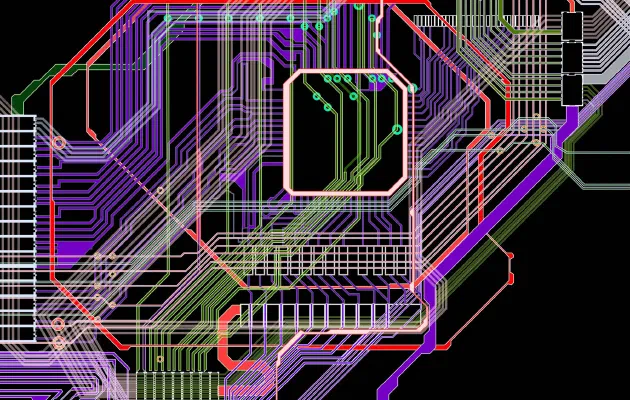

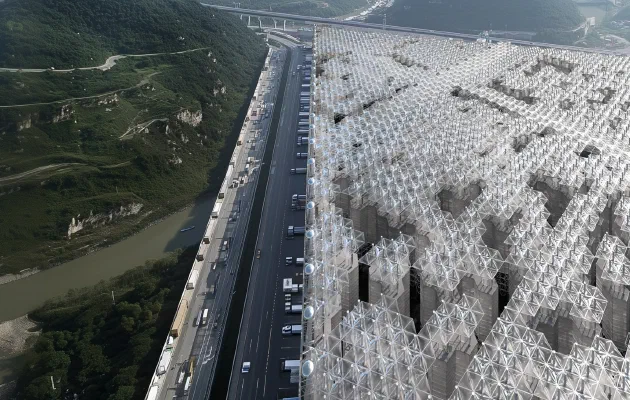
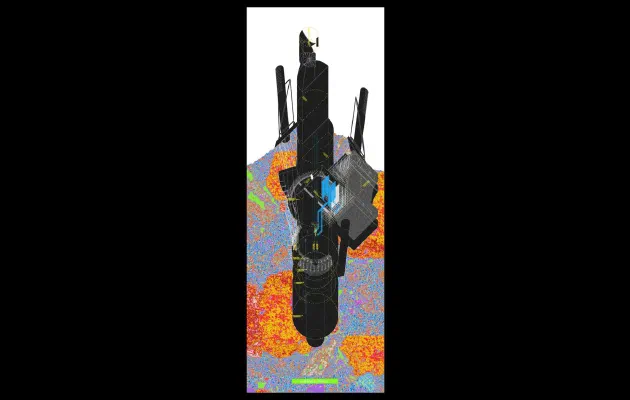
Issue 12 of the Modi Operandi presents a project that investigates the architectural potential of automated production processes in Chongqing (China). Even though China’s population numbers are reasonably stable at the moment, the societal impact of its increased welfare has caused a major upsurge in consumption and spending. The project starts with an elaboration of the theoretical consequences of the ever-expanding, digitally automated production and logistical processes as well as the technology-driven increase of velocity in a globalised world. By critically reflecting on these tendencies, the project tries to envision an architecture in which electronic machines, digital technologies and human needs are attended to simultaneously. The intent to produce food for the masses in an environmentally (and reasonably) sustainable way, consequently results in an architecture that operates at a mega scale. The project thus embraces this current state of affairs by questioning (or accepting?) the fundamentally altered role of architecture in contemporary society. The project contributes to the profound tradition of architectural drawing techniques by giving special attention to the representational aspects of data visualisations of digital processes.
Office for Digital Oblivion
Modi Operandi 11
Go to Publication
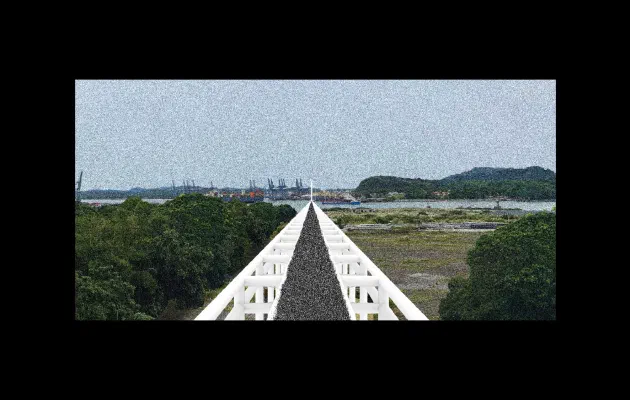
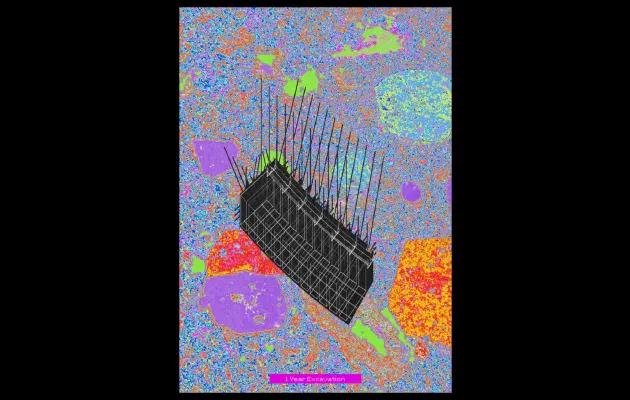
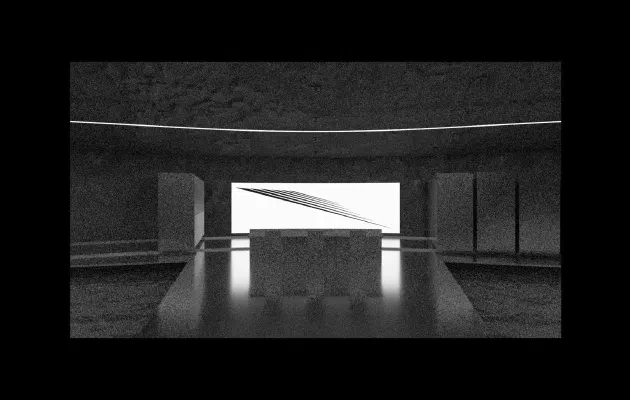
Issue 11 of the Modi Operandi presents a project that investigates the notion of the ‘Zone’ as a spatial tool employed in the construction, development and control of the Panama Canal. The Zone is understood as a demarcated spatial entity wherein a set of rules, laws, norms or codes have been altered vis-a-vis its exterior, which has been instrumentalised by a wide variety of actors throughout different geographies of the Panamanian Isthmus for multiple reasons. Beyond the political and geographical significance, the territory of the Panama Canal is understood as an infrastructural issue from the outset. It is an almost diagrammatic application of cartographic abstractions of logistical flows onto a territorial reality which is operationalised via the activation of a series of Zones or landscapes of otherness. The idea of the project is to make use of these landscape of otherness to uncover the workings of the constitutive political economy. By grafting onto the remaining zonefacts, the project intends to re-ground discourse on information technologies and the realm of the digital through engagement with its immediate material conditions and operations. With that, it puts forward new approaches to conceive of infrastructural systems, transgressing purely technocratic dogmas and proposes new ways of thinking, worlding and becoming-together in the Anthropocene.
The Landscape Post-Mortem
Modi Operandi 10
Go to Publication
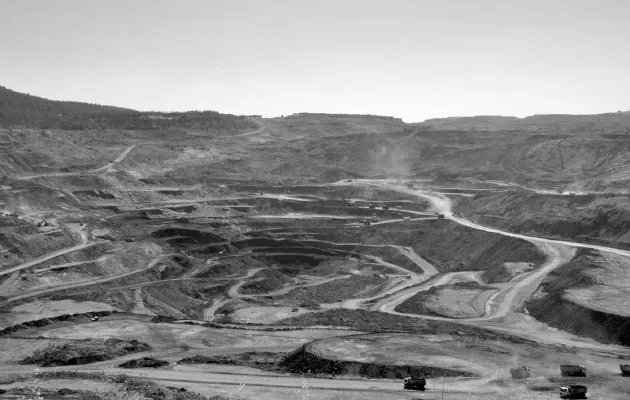
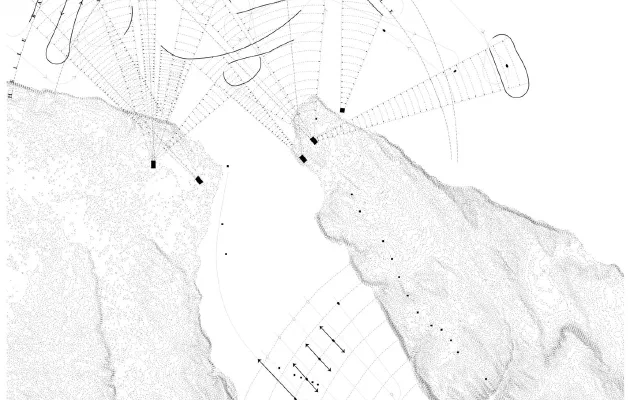
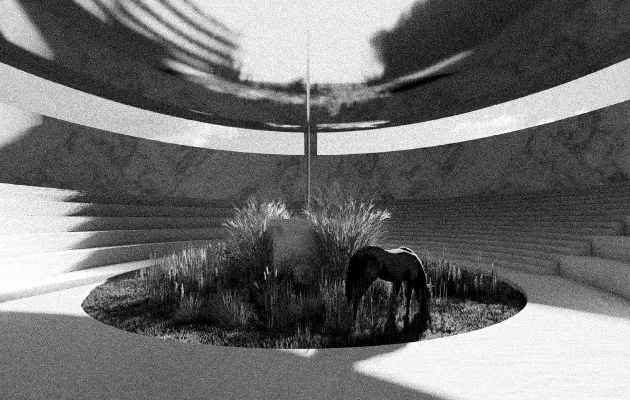
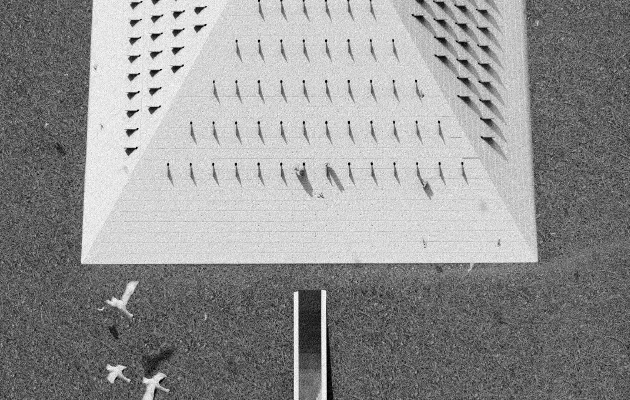
Issue 10 of the Modi Operandi presents a project that investigates conditions of formation of postindustrial landscapes in Turkey, a result of varying demands and rich natural resources along the New Silk Road. Turkey is then at the forefront of rapid transformations, made possible by its complex infrastructural landscape and abundance of natural resources. The research conducted at the start of the project focused on the indeterminate forces that shape the built environment, forces that have resulted in the formation of many ‘ephemeral’ cities along the New Silk Road. As such, the main outcomes from the research stage resided in the definition of the leftover spaces of intensive industrial exploitation: ‘dead’ landscapes that are understood as the results - and eventual symptoms - of Indeterminacy surrounding the natural state of the site under study (an open-air coal mine), coupled with intensive anthropogenic exploitation of its resources. These dead landscapes dictate the eventual conceptual approach dealing with the territory as a constructed industrial whole, in relation to many fragmented instances of Indeterminacy.
Surfaces at Large and The Meanness of Measure
Modi Operandi 09
Go to Publication
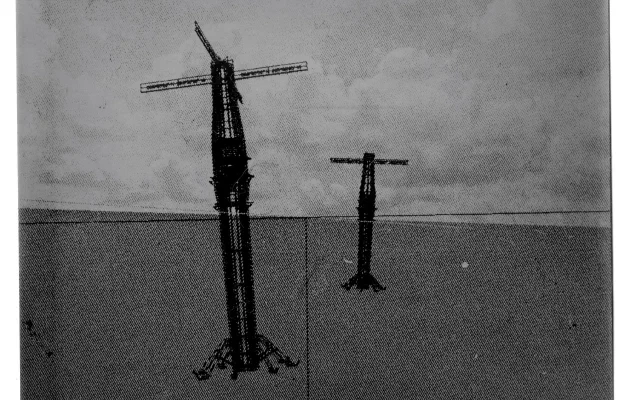
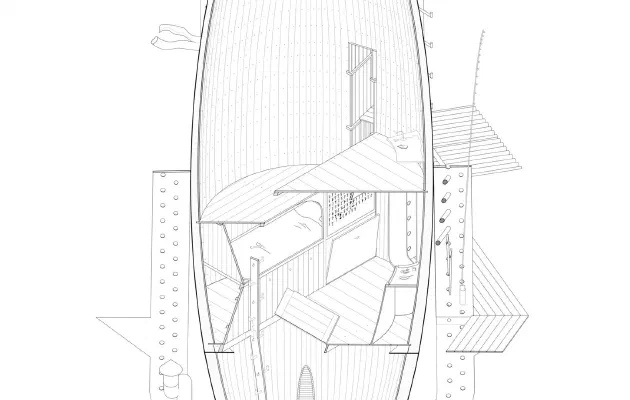
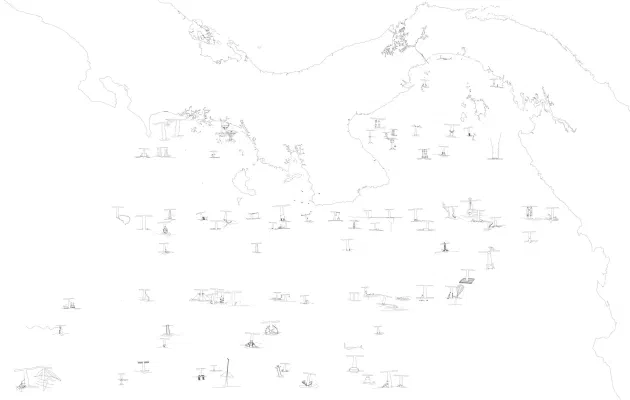
Issue 09 of the Modi Operandi presents a project that investigates the modernity’s desire towards the true measure and its precision, in the context of The Panamanian Isthmus. Serving as an essential member in the global infrastructure of a consumerist society and as an extension of the New Silk Road, the functioning of the Panama Canal is dependent on highly complex systems of measure that attempt to seize vertical and lateral control over the slippery surface of two distinct oceans that are in constant flux. These systems of measure are not new, nor are they innocent or of a purely rational logic.This project takes the textured and ever-moving surface to be an ontological starting point of space itself. Embracing the mythos of a precise measure, the emergent project is the result of a constant negotiation and methodological interaction with imprecision and analogue media to produce minor errors. These errors serve as the starting point for 97 architectural structures that are positioned along intersections of the cartesian grids of 10 historical maps of Panama’s Pacific coast. These follies in turn take site-specific measure of their locations to problematise the global system of measure that passing container ships rely upon, as well as the colonial logic of the map and its consequences for architectural thought.
It All Starts With a Wall
Modi Operandi 08
Go to Publication
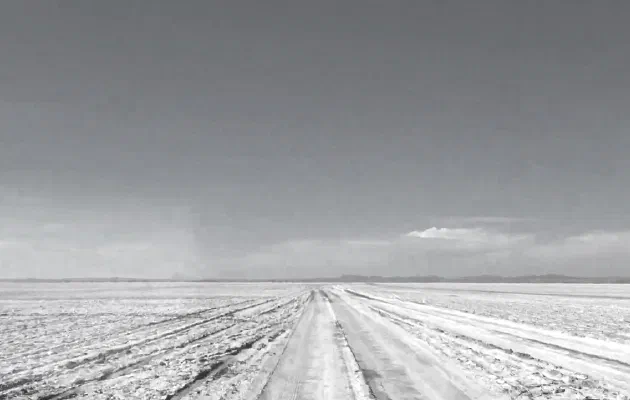
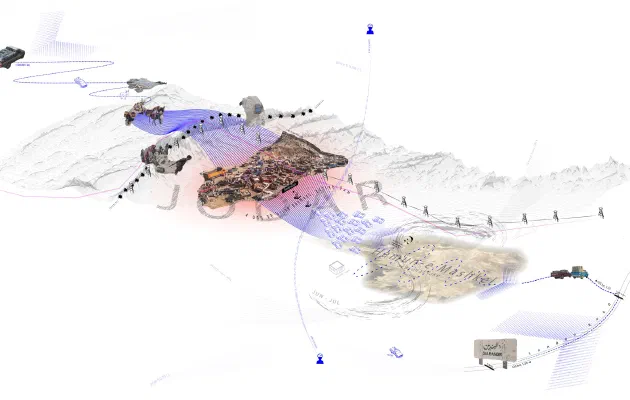
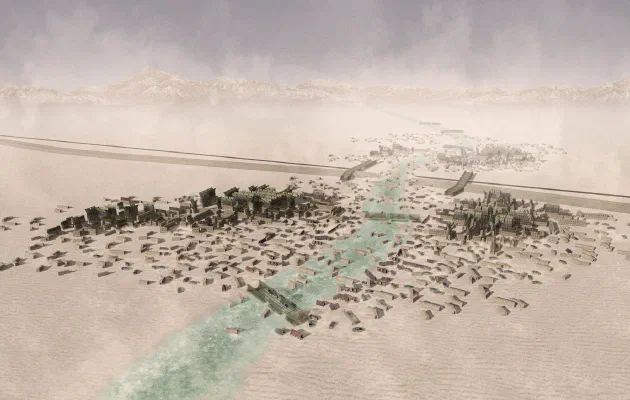
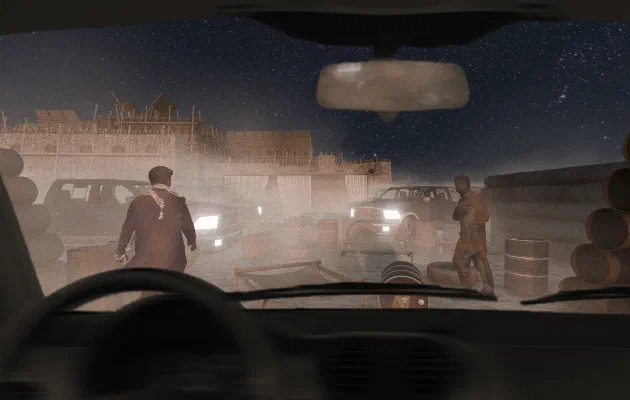
Issue 08 of the Modi Operandi presents a project that investigates a multiplicity of fluxes, practices and conditions around the mountainous border separating Iran and Pakistan. Movements around the border in Balochistan stem from unavoidable political, economic, and social bonds, pushing locals into what Western observers label the ‘grey economy.’ Dismissing the legal/illegal dichotomy reveals that smuggling underpins Balochistan’s economy and job market, forming its essential, though invisible, infrastructure whereby Balochi smugglers, highly mobile and resilient, function as biological agents facilitating commodity flow, crucial for regional survival. This perspective shifts from viewing smugglers as dehumanized infrastructure to recognizing them as vital, living components animating the economy. The border, therefore, transforms into a transition zone, where individual actors collectively form a dynamic, communitarian infrastructure. This project aims to spatially materialize the rhizomatic nature of Balochistan’s invisible infrastructure, using design to problematise exploitative practices of the state. It translates smuggler strategies into spatial forms that sustain their activities and foster a sense of control over their homeland, putting forward systemic tactics that can be gradually implemented along the border.
Hinterland in Transition
Modi Operandi 07
Go to Publication
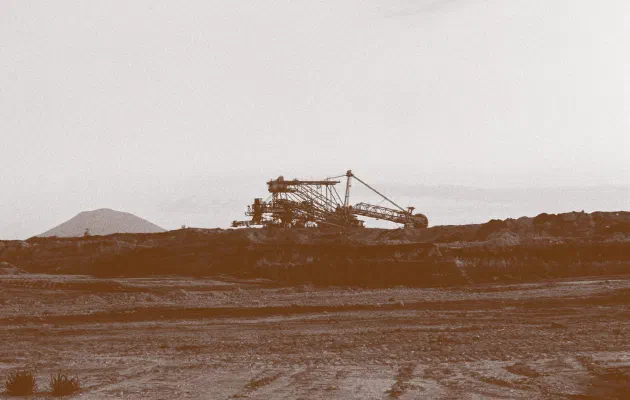
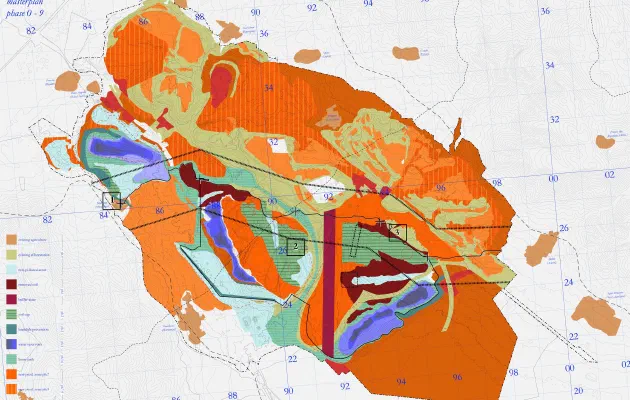
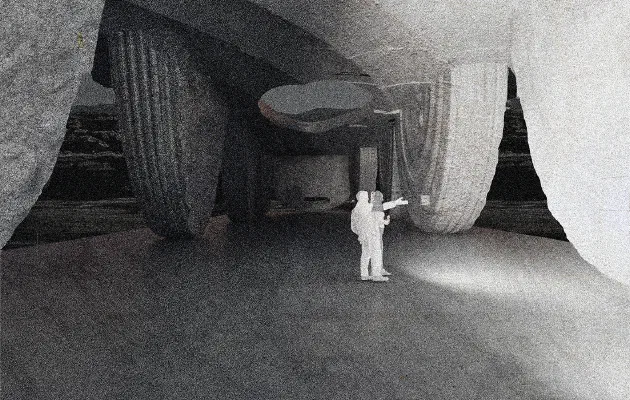
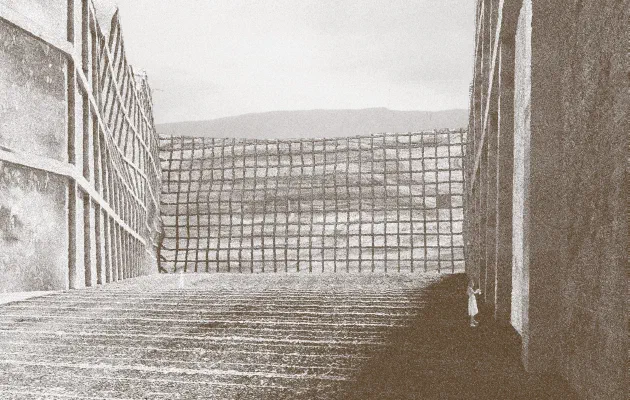
Issue 07 of the Modi Operandi presents a project that explores several ways of thinking about hinterlands by analyzing the area of West Macedonia (Greece), which today exists as an energetic landscape. Three interventions are proposed, each of different temporalities, scales, and materials, and each relating back to the context of the place, its ecologies, socio-economic forces and inhabitants. The project proposes the hinterland to remain in a state of flux, but in a more balanced, and less profit-oriented manner, and initiated by a transition process that naturally affects the environment and the architectural interventions. It focuses on identifying points of intensification, integrating the necessary steps into the current conditions, as well as considering the changes that would unfold over a long period of time. In contrast to the paradigm of speed of the technological acceleration, the effects of future transformation will be slow and subtle, requiring the active and sustained engagement of long-term partnerships between the inhabitants and public sectors, with much greater attention to various visible and non-visible layers. The project thus constitutes an ignition moment: it delineates a small gesture that suggests a potential evolving direction within the ongoing continuum of the hinterland.
Archipelago of Wonders
Modi Operandi 06
Go to Publication
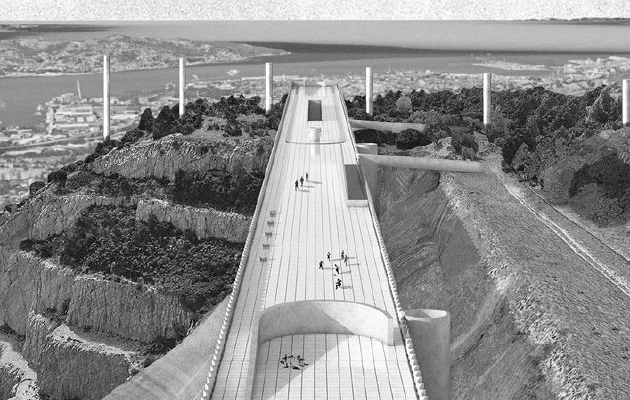
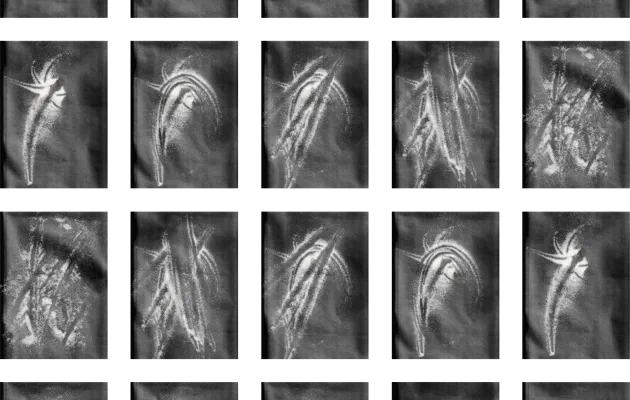
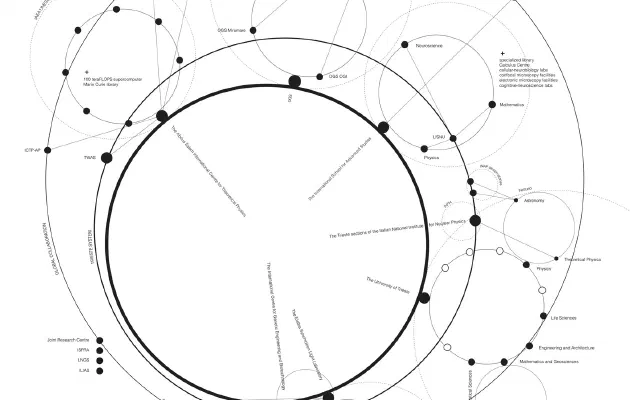
Issue 06 of the Modi Operandi presents a design for an Independent Research Institute for Scientific Failures in the post-industrial landscapes of Trieste, Italy. A fascination with obsolescence as an inherent landscape condition lies at the core of a project, which thematically concerns fundamental scientific inquiry. It stems from the preconceived tensions between progress versus obsolescence—and—progress versus accident. The project addresses the need to contain scientific progress architecturally inside micro-regions of concentrated knowledge and satisfy the territorial concerns of the Big Science that—more often than not—take on an infrastructural scale. It addresses these themes in Trieste—a territory once envisioned as the city of science and knowledge. Architecture is argued to be a relevant space where the tensions between progress, obsolescence and disaster could play out productively and dive into architecturally little-theorised spaces. Anatoli Bugorski Independent Research Institute for Scientific Failures inhabits a postindustrial landscape of the former cement quarries in Trieste that allow for sustaining such an institution—by providing the underground territory for experimentation and the primary structural material for the institute. The project speculates on reversing re-naturalisation processes and excavating the underground spaces by employing a room and pillar mining method superimposed upon the critically unstable conditions of the Karstic terrain. Here, the notions of accident and disaster materialise within the postindustrial landscape.
Banality of Death
Modi Operandi 05
Go to Publication
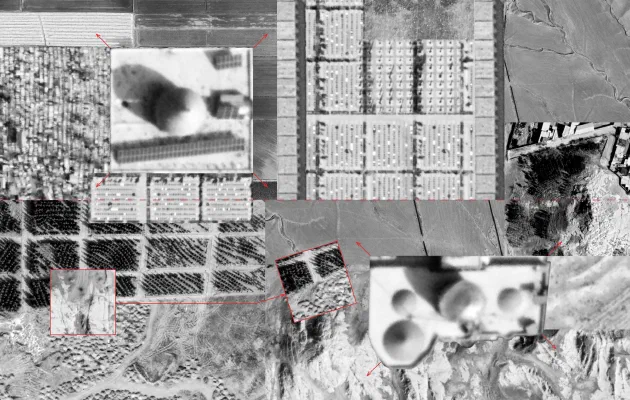
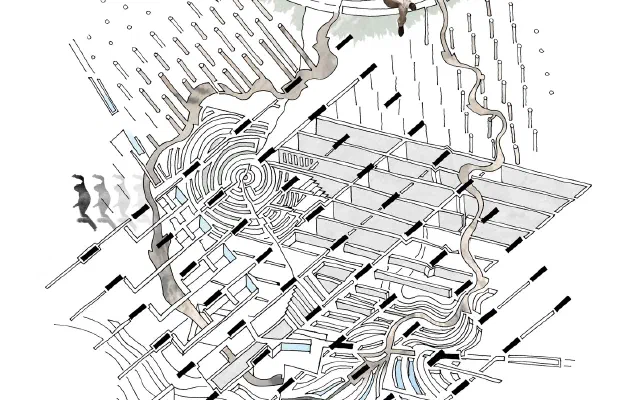
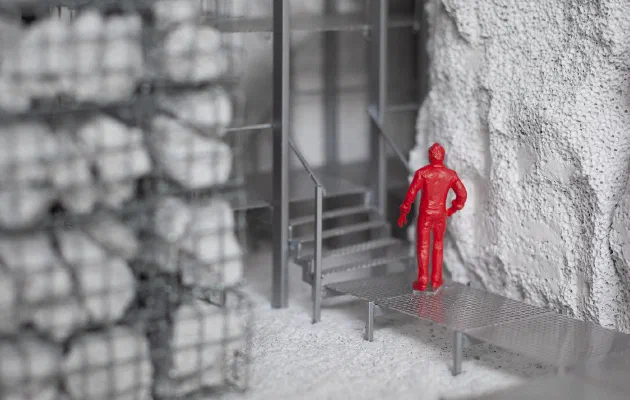
Issue 05 of the Modi Operandi presents the design for three rest stops along the main highway that connects the city center of Mashhad, Iran, to its main cemetery. Although death is embedded in the culture and history of Mashhad, the present-day displacement of burials to the outskirts of the city, together with a streamlined, dehumanized, and bureaucratized funeral ritual, have resulted in a disengagement between spaces for the living and for the dead. As a response to this (global) condition, the thesis reflects on the tensions that have emerged between traditional cultural values and modern changes to the burial process. In the act of creating a variety of mappings, here referred to as ‘complexity drawings’, these tensions are translated into three rest-stops: the playscape, the washing station, and the viewing tower. The constellation of these interventions is located along the highway that connects the city to the main cemetery, functioning as an extension of the urban territory. Each rest-stop design accommodates a place for rest and leisure while simultaneously providing new emotional space to an extended funeral ritual. By interweaving the ritual of death with recreational activities, the interventions act as mediators between the territories of the dead and the living.
Critical Zone Sensor
Modi Operandi 04
Go to Publication
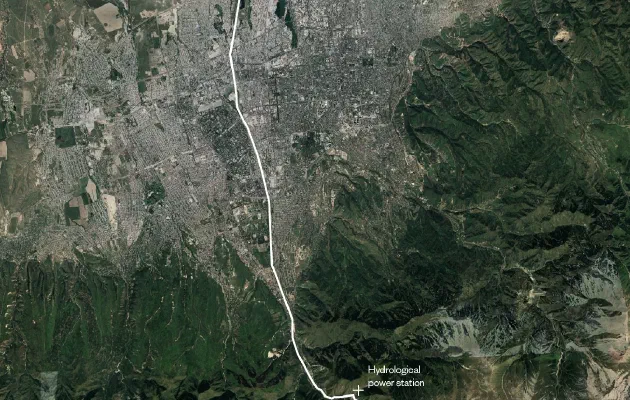
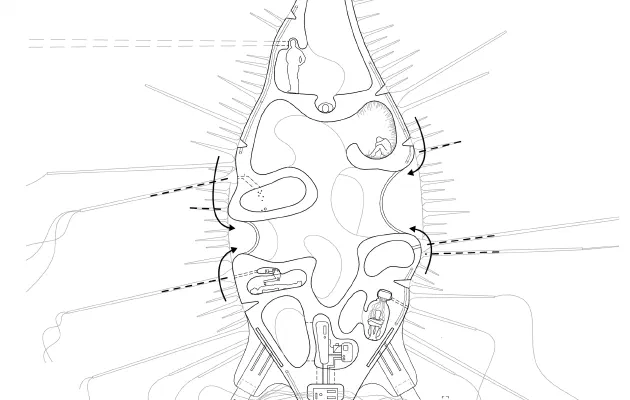
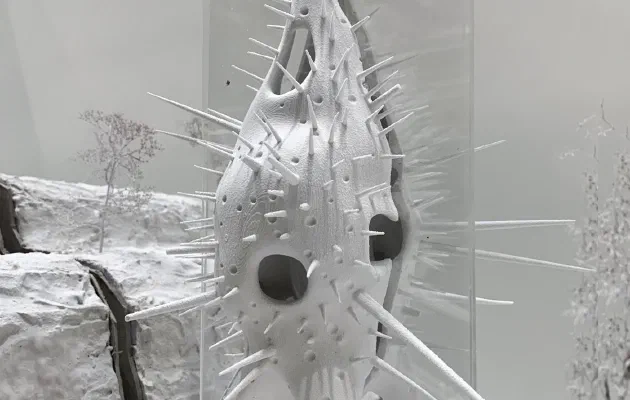
Issue 04 of the Modi Operandi presents the design for a Critical Zone Sensor for the town of Almaty in Kazakhstan. The project deals with the territory as a sensing device and the architectural project as sensory extension of the human body. The Critical Zone is a thin layer of several hundred meters thick above and below the surface of our planet in which human activity has a significant impact on Earth’s geology and ecosystems. The project distributes the sensing devices used to research the Critical Zone and aims to integrate the multiple disciplines of Critical Zone Science such as geology, hydrology, and ecology to understand the Critical Zone as one heterogeneous and complex system. The chosen site is Almaty’s most Critical Zone, characterized by natural hazards such as earthquakes, landslides and mudflows. The project speculates on an intimate relationship between the human body and technology and sees the architectural project as a sensory extension of the human body. The sensed environment is perceived as an intimate bodily experience through hearing, pain, sexual pleasure, designer drugs, taste, etc. The project is made for the sensor and treats the human as a guest resulting in a continuous spatial complexity and an intimate habitation of squeezing, folding, and crawling.
Territory and trans-gression
Modi Operandi 03
Go to Publication
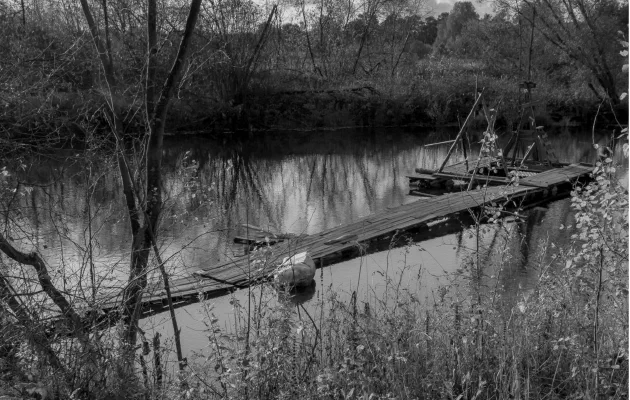
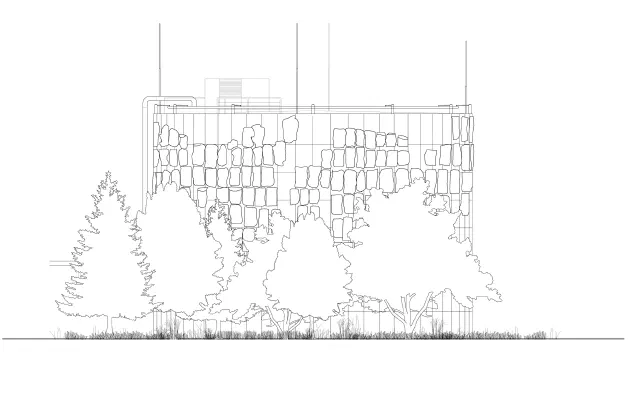
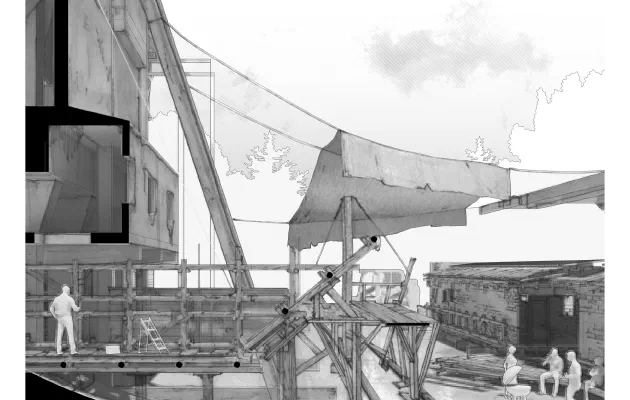
Issue 03 of the Modi Operandi presents the design for a procedural rehabilitation structure for the town of Degtjarsk in Russia: An Architecture of/for failure. The point of departure for the project is the claim that the territories like Yekaterinburg and the mining town of Degtjarsk are the result of the failure inherent in the pro-gressive culture of modernity and the radical industrialization and exploitation. To act in such a context then requires an acceptance of the nihilism produced by that failure. Accepting finitude and our limitations are the trans-gressive movements -instead of pro-gressive- towards the territory that allows us to speak relationally of it. It allows us to value the meaning of imperfection, and performability. This operation of ‘revival of the dead’, gives rise to local practices of improvisation and manipulation of that decaying source of building material, touching, manipulating, and scavenging what is left from the failure of the past grand project. Hence, as a process of ‘taking care’, this project creates a trajectory by designing intermediate phases of a spatial rehabilitation and self-reliance. It suggests a clinical operation capable of providing all the tools for the local community to practice tactical urbanism and participatory design.
Spaces in play
Modi Operandi 02
Go to Publication
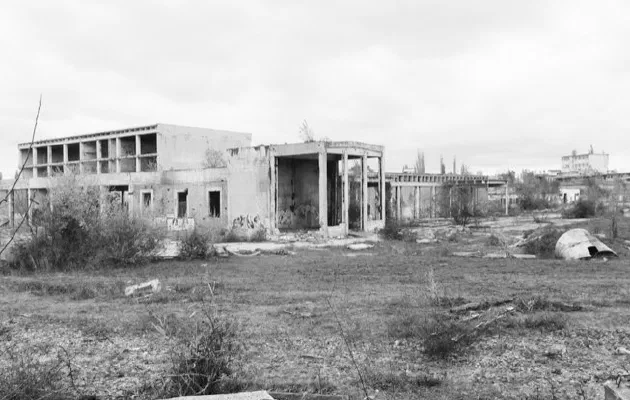
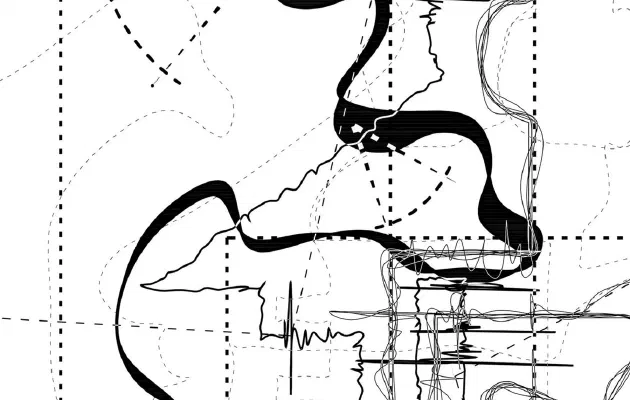
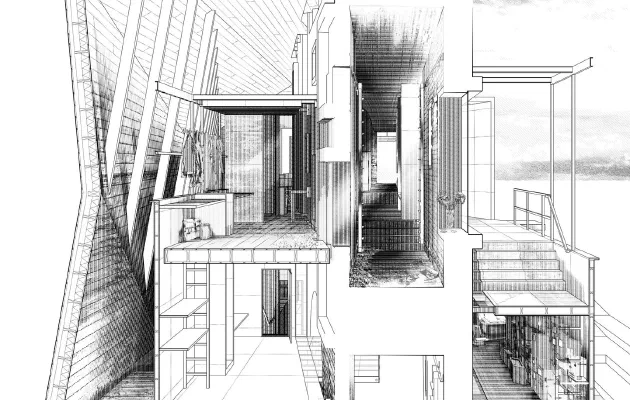
Issue 02 of the Modi Operandi presents the design for an Institute of Memory in Bucharest. The point of departure for the project is the claim that Bucharest is saturated with spaces in decay. These peripheral spaces are scattered throughout the urban landscape, inviting the inhabitants of the city to engage in a great variety of activities, including urban play. The Institute of Memory is intended to form a counter-gesture at the very heart of the city, i.e. next to Ceaucescu’s House of the Republic, thus offering a moment of detached reconciliation with experiences of memory and loss.
Spaces, Poetics and Voids
Modi Operandi 01
Go to Publication
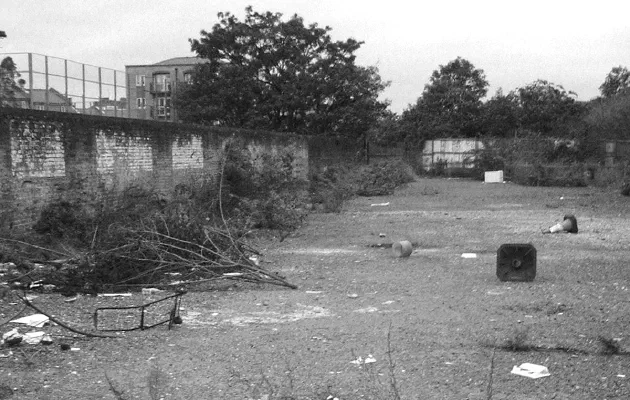
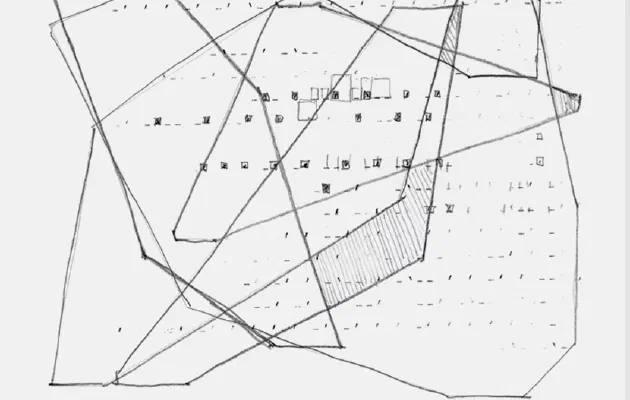
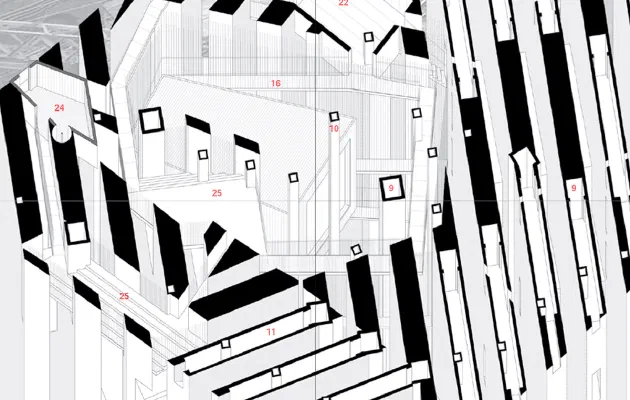
Issue 01 of the Modi Operandi presents the design for a prison complex in London. The point of departure for the project is the insight that London consist of a multiplicity of spatial configurations, caused by the continuous growth of the city as well as the fluctuating, though high pressures of the real-estate market. The prison is conceived as a closed and sombrely confined space made possible by sequential structural elements that offer a measure of transparency vice-à-vis the city.